
'Will people who buy iPhones stop buying iPhones to help swadeshi models?' 'There should be some advantage for the consumer to make them buy a Made in India product.' 'Patriotism and nationalism are good words, but in business, it won't work.'

The country would see more economic progress if the private sector was left to run business without government interference, Infosys founder N R Narayana Murthy has said at the Jaipur Literature Festival.

'By not letting bankrupt banks fail, we have discouraged ordinary folk from taking precautions while choosing their bank or at least when they hear bad news about their bank,'says S Muralidharan, former MD, BNP Paribas.

'It has even been suggested that Modi and Amit Shah, however grudgingly, harbour admiration for her controlling streak and steely resilience,' says Sunil Sethi.
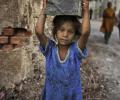
Poor predictability, credibility and effectiveness of fiscal performance have been key reasons for successive governments failing to deliver on their promises.

Dr Talat Ahmad, vice chancellor of Jamia Milia Islamia suggests important reforms in the Indian education system.
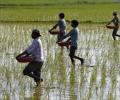
Telangana's Rythu Bandhu policy is an embryonic UBI, or rather embryonic QUBI (a quasi-universal basic income, pronounced Kyoo-Bee). And it could potentially also be the future of agricultural policy in India, says Arvind Subramanian.

This Budget plans for an increase to 10.3% of GDP from 9.9%.

The fiscal deficit of the Centre remains a worry, running at over 6.5 per cent of GDP in April-September 2014, mainly because of revenue shortfalls from exaggerated projections in the government's July Budget and despite the relief on subsidies from lower oil prices.

Flexibly targeting inflation is consistent with a demand stimulus, says Ashima Goyal.

With EU, it is part of the FTA that we will need to negotiate.

A V Rajwade wonders if the Modi sarkar is pursuing price stability at the cost of potential social instability in both rural and urban India.
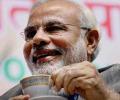
FIXES BY THE GOVERNMENT: Energy price fixed, tax issues linger.

Or, what will the Indian policy process allow it to be, says Ajit Balakrishnan.

The resilience of many emerging markets, notably China and India, in the aftermath of the Lehman shock further strengthened this sense of manifest destiny.

Instead of failing young Indians, the government should now focus laser-like on education, skilling, healthcare, and the environment, says Mihir S Sharma.

Chief Justice of India Ranjan Gogoi on Monday said it was in "our best interest" to heed the advice of the Constitution as not doing so would result in a "sharp descent into chaos".

Creating many more half-decent jobs for the 10 million plus new entrants to the labour force each year must surely constitute the primary development challenge for India today.
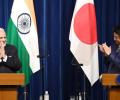
'Relations between India and Japan are robust and devoid of either shadow of history or any irritant.' 'In fact, there is plenty of warmth and goodwill earned over history. There are no negatives but only opportunities,' notes Dr Rajaram Panda.

The ecosystems of India and China today jostle against one another across Asia and much of the world.

With clouds of storm hovering over Parliament's budget session, President Pranab Mukherjee on Monday sought the "cooperation" of all MPs in the smooth conduct of legislative business but gave no indication of plans to bring changes in the controversial land acquisition ordinance.

If only Mahabharat was a made-for-radio special instead of a half-heartedly animated demo reel masquerading as a children's fantasy, writes Sukanya Verma.

Nearly 14.3 million people, including children, are 'trapped' in modern-day slavery in India, which tops a global index of people under bondage across the world with an estimated 35.8 million people enslaved, a new research said on Monday.

Following is the full text of Congress vice-president Rahul Gandhi's speech at FICCI's 86th annual general meeting on Saturday:

The 'Make in India' concept in the defence sector has the potential to help India meet 70 per cent of its defence needs in a few years.

Curbing the federal deficit is the government's absolute priority on February 28.

Against a turbulent and uncertain background, Budget 2017-18 hewed a steady, forward-looking course, says Shankar Acharya, former chief economic adviser to the government.

The referendum will have long-term implications for Indian companies, which earn a substantial portion of revenue from the region.

The watershed 2014 Indian election has thrown a decisive mandate after 30 years of coalition-based governments.

The prime minister's August 15 address was undoubtedly inspirational and outlined important economic and social objectives, such as making India a global hub for manufacturing, ensuring bank accounts for all poor families, major thrusts in sanitation and cleanliness, and a radical restructuring of the Planning Commission.
While naysayers say the economy is on a downward spiral, optimists point out that India has experienced a shift of gears in the realm of policies, thanks to several initiatives of the Narendra Modi government, says Ashok K Lahiri.

In the run up to three years of the National Democratic Alliance government, Minister of State for Commerce and Industry (Independent Charge) Nirmala Sitharaman says it is time to consolidate some of the major initiatives as well as take new steps.

Supported by slightly stronger global growth, improving export competitiveness and implementation of recently approved investment projects, India's growth is expected to recover from 4.4 per cent in 2013 to 5.4 per cent in 2014, the IMF said.

At present there is virtually no dialog between votaries of different various versions of economic democracy.

To do so, the government will have to tackle a number of broad development challenges successfully, says Shankar Acharya

India stands at an embarrassingly low 130 among 190 countries in the World Bank's Ease of Doing Business rankings. But in our worry over it are we forgetting the big picture -- to make India an attractive investment destination -- wonders Avirup Bose.
Even as India continues on the priority watch list of the Office of the US Trade Representative, strong voices from Washington, DC, have spoken out in favour of India, reports Aziz Haniffa/Rediff.com.

The annual list, released on Wednesday by Geneva-based World Economic Forum, comes at a time when the new Indian government has completed 100 days in power and has promised further steps to revive its economy and the ease of doing business in the country.

Let us see the problem for what it actually is: Illegal Immigration plain and simple, confined to the northeast with a definite communal slant that poses a national security risk and one that needs to be dealt with firmly and promptly by stringent identification (and deportation), says Vivek Gumaste.

Calling people of the northeastern region by "derogatory" names will soon become a non-bailable offence and land you in jail for up to five years.
